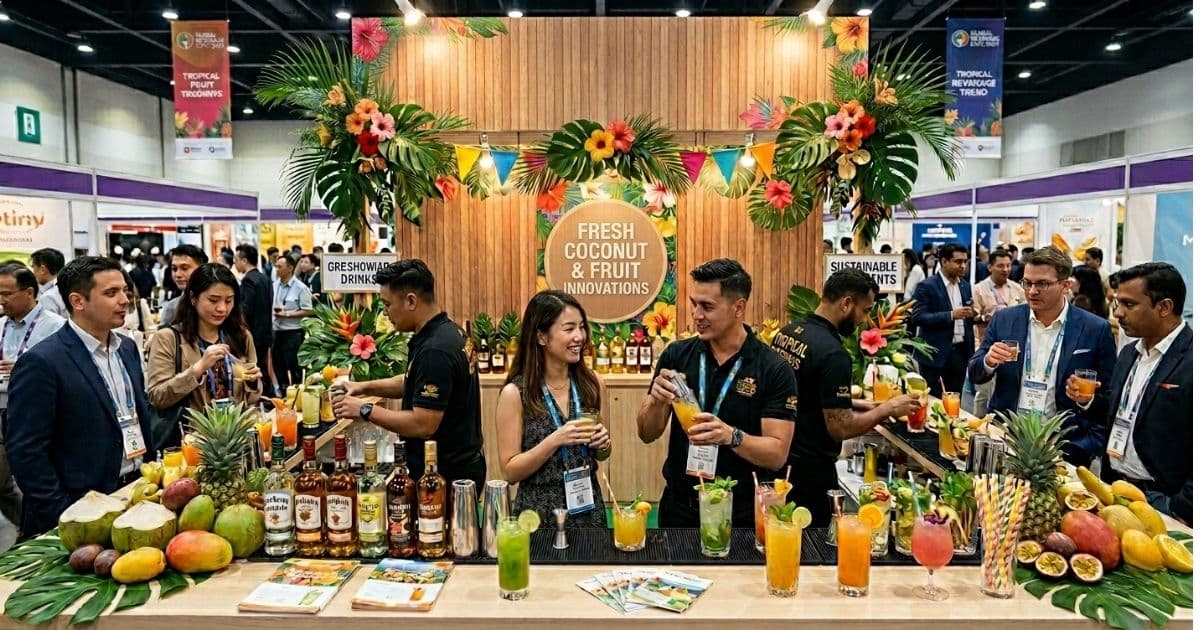
Global trade events are one of the fastest ways to understand real buyer behavior. In crowded exhibition halls, buyers reveal their priorities not through reports—but through what they taste, what they ask, and which products make them stop and look twice.
For exporters, brand managers, and sales teams, these moments offer practical insights into what truly drives demand. This article breaks down the tropical beverage trends buyers notice at global trade events, helping brands translate observation into action.
International trade fairs bring together multiple markets in a single environment. Within a few days, brands can observe buyer reactions from importers, distributors, retailers, and foodservice professionals across regions.
This makes exhibitions a powerful space to identify emerging category signals, packaging expectations, and real purchase intent patterns.
Below is a structured guide to the tropical beverage trends buyers are paying attention to—and how brands can use these insights to refine portfolios, booth strategies, and follow-up communication.
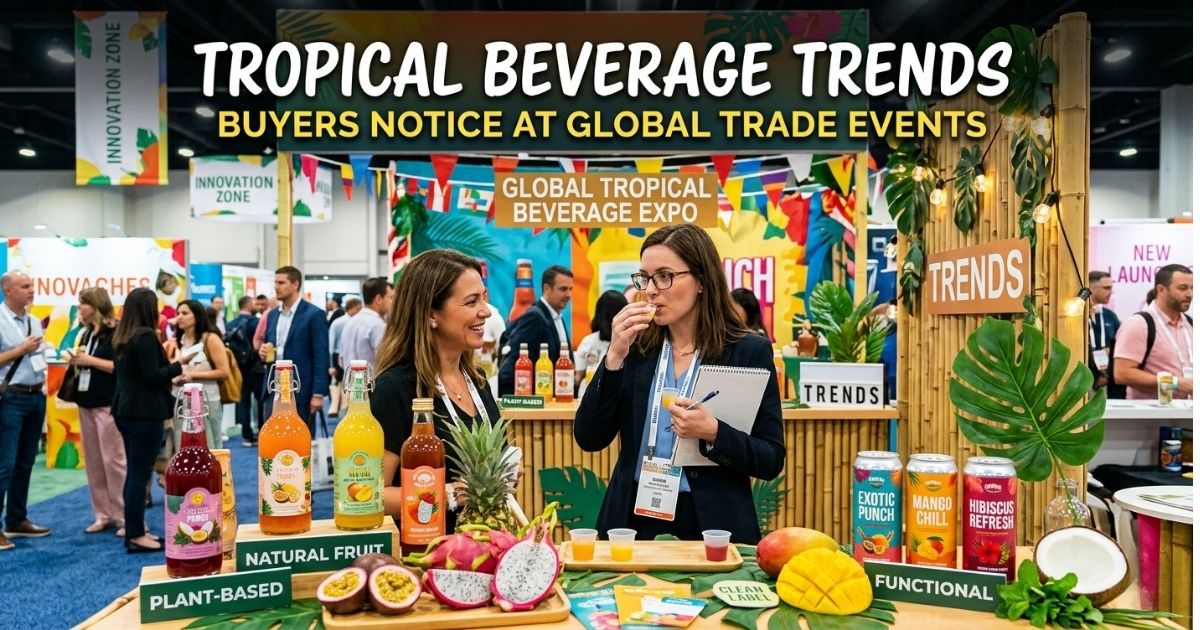
1. Why global trade events are valuable for reading beverage demand
Trade shows offer immediate, real-world validation of product appeal. Unlike static research, exhibitions allow brands to observe:
- Which booths attract consistent traffic
- Which samples are requested repeatedly
- What questions buyers ask most often
These signals highlight which categories are gaining actual commercial traction—not just theoretical interest.
2. Tropical flavors continue to stand out in crowded exhibition halls
In a saturated beverage landscape, tropical flavors consistently capture attention. Mango, coconut, guava, pineapple, lychee, and passion fruit stand out because they communicate:
- Refreshment and natural appeal
- Strong origin identity
- Differentiation from standard fruit categories
Buyers often gravitate toward flavors that balance familiarity with a distinctive regional twist. Mixed tropical blends, in particular, perform well as they offer both accessibility and novelty.
3. Coconut beverages remain one of the most noticed traffic-driving categories
Coconut beverages continue to draw strong buyer attention across global exhibitions. Their appeal lies in versatility:
- Coconut water for hydration positioning
- Coconut juice with pulp for texture and authenticity
- Flavored coconut water for mass market appeal
- Blended coconut drinks for innovation
Buyers frequently compare formats based on channel fit, price point, and branding potential. This makes coconut beverages a key category for both entry-level and premium positioning strategies.
4. Aloe vera continues to attract attention through texture and visual differentiation
Aloe vera drinks stand out immediately due to their visible pulp and unique drinking experience.
Beyond flavor, buyers notice:
- The visual clarity of the product
- The texture experience during sampling
- The ability to differentiate on shelf
Aloe beverages are often seen as flexible products that can perform in both ethnic markets and broader refreshment-focused channels when presented clearly.
5. Packaging cues are noticed almost as quickly as flavor
Before tasting, buyers often evaluate packaging. Format influences first impressions related to:
- Portability and convenience
- Shelf impact and branding
- Premium vs. mass positioning
- Logistics and shipping efficiency
Cans, PET bottles, glass, and cartons each communicate different signals. At exhibitions, the right format can determine whether a buyer engages further or moves on.
6. Clean label and simpler communication are increasingly visible expectations
Modern buyers are scanning for clarity. At global events, they tend to prioritize:
- Easy-to-understand ingredient lists
- Clear product positioning
- Straightforward messaging
Rather than complex claims, buyers respond to transparency and trust. Clean label positioning has become less of a trend and more of a baseline expectation.
7. Buyers notice whether a portfolio fits real channel needs
Products are rarely evaluated in isolation. Buyers assess whether a brand offers a complete, sellable portfolio, including:
- Hero SKUs for visibility
- Supporting products for range depth
- Multiple packaging sizes
- Balanced price architecture
A well-structured portfolio signals readiness for retail, wholesale, convenience, online, and HoReCa channels.
8. Regional preferences still shape what gets attention
Global exhibitions highlight both shared trends and regional differences.
- Asia: preference for texture, sweetness variety, and innovative flavors
- Europe: focus on clean label, balanced sweetness, and packaging sustainability
- Middle East: demand for premium presentation and bold flavors
- North America: interest in functionality positioning and lifestyle alignment
Understanding these differences helps brands tailor offerings for specific markets rather than applying a one-size-fits-all approach.
9. Sampling experience and product presentation strongly influence buyer perception
What buyers notice is shaped by the entire booth experience. Key factors include:
- Serving temperature
- Sampling method
- Clarity of product information
- Staff ability to connect products to business opportunities
A well-executed presentation can turn curiosity into serious commercial interest, especially for tropical beverages that rely heavily on sensory experience.
10. What these trend signals mean for beverage brands after the event
Trade show insights should not remain observations—they should drive action.
Effective brands translate signals into:
- Portfolio adjustments
- Updated product catalogs
- Refined sales narratives
- Improved website and landing pages
Capturing recurring buyer questions and feedback allows teams to strengthen post-event communication and increase conversion rates.
11. Common mistakes when reading trade event trends
Misinterpreting exhibition signals can lead to poor decisions. Common mistakes include:
- Overreacting to isolated buyer interest
- Assuming one region reflects global demand
- Confusing curiosity with purchase intent
- Failing to document feedback systematically
Successful brands rely on structured analysis, not impressions alone, to guide strategy.
What tropical beverage trends are buyers paying attention to at trade shows?
Buyers focus on tropical flavors, coconut-based products, aloe vera drinks, clean label positioning, and practical packaging formats.
Why do coconut beverages attract strong buyer interest at global exhibitions?
They fit multiple market needs, including hydration, refreshment, and flexible positioning across different channels.
How do buyers compare tropical beverage packaging at international events?
They evaluate portability, shelf appeal, logistics efficiency, and how packaging aligns with target market expectations.
What do trade events reveal about beverage flavor preferences across markets?
They show both global demand for tropical flavors and regional differences in sweetness, texture, and flavor complexity.
How can beverage brands turn exhibition trends into stronger sales follow-up?
By documenting buyer feedback, refining product messaging, updating catalogs, and aligning offerings with real market demand.
VINUT Team
VINUT Editorial Team
The VINUT editorial team shares product updates, beverage category context, and B2B distribution guidance for international buyers.