
Quick Answer
Introduction
Beverage export readiness is not just about having a good product. It is a combination of consistent quality, suitable packaging, proper documentation, market understanding, and the ability to support long-term partnerships. This guide explains what makes a beverage brand export-ready from a buyer’s perspective.
1. Consistent Quality and Scalable Production: The Foundation of Export-Ready Operations
Product quality is the foundation, but consistency is what builds trust. Buyers expect that the product they test today will match future shipments in taste, appearance, and overall experience.
Equally important is the ability to scale production. A brand that can handle increasing order volumes while maintaining quality is far more attractive for international distribution. This is a core requirement within international beverage supplier standards.
2. Export-Ready Packaging and Shelf Life Integrity
Packaging plays a critical role in export success, as it directly impacts transportation efficiency, shelf presentation, and overall buyer confidence. To meet international expectations, packaging should align with both logistical and retail requirements, including:
- Suitable can or bottle sizes for different markets
- Efficient carton and case pack formats for shipping
- Clear, compliant labeling for international consumers
Beyond structure and design, packaging decisions today are increasingly influenced by evolving retail trends and buyer preferences. In markets like Europe, factors such as private label growth, sustainability, and clean-label positioning are shaping how products are packaged and presented.
👉 To explore how these trends are influencing packaging strategies, read more about private label beverage trends in Europe.
In addition, shelf life and storage conditions must be clearly defined. Transparent information helps distributors manage inventory more effectively, reduce risk, and plan market entry with greater confidence.
3. Certifications and Documentation for Export-Ready Compliance
Certifications and documentation are essential trust signals. They help buyers evaluate risk and confirm that a brand is prepared for formal trade requirements.
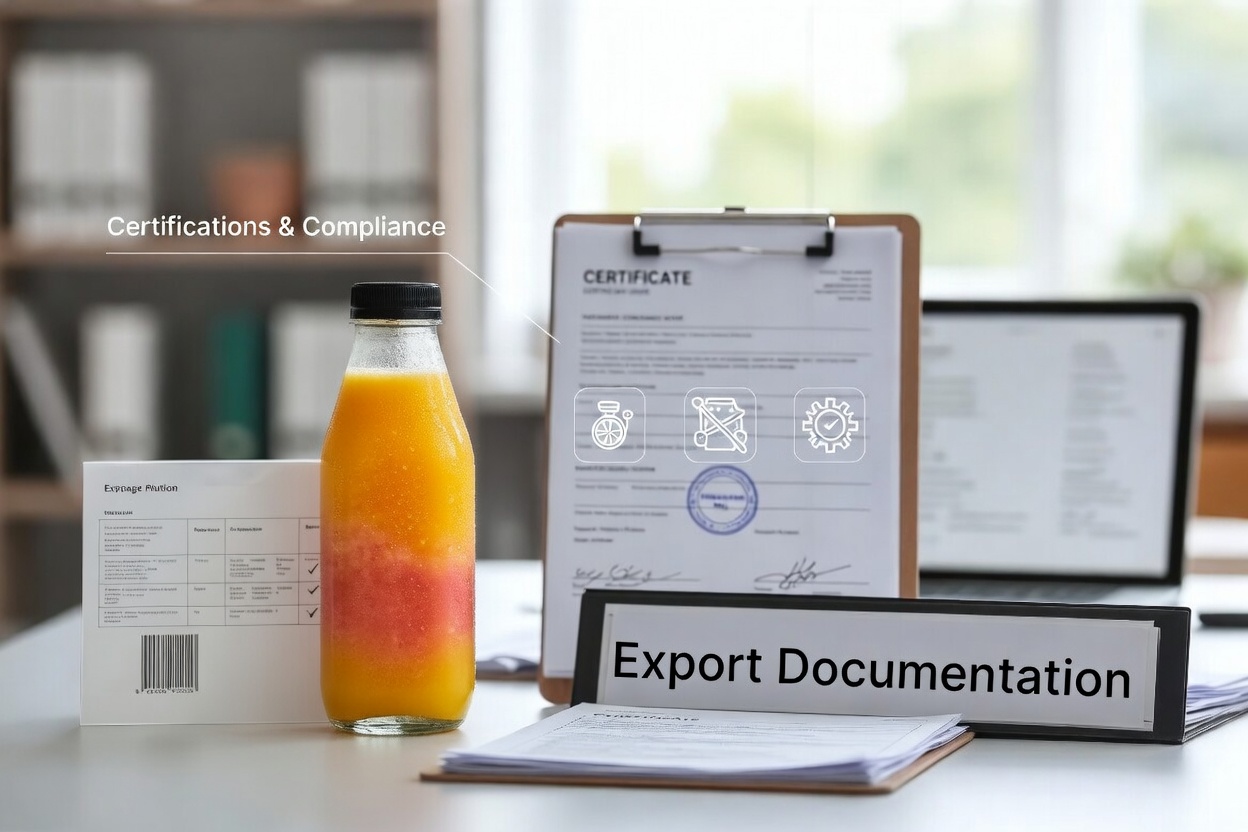
A typical export beverage brand checklist includes:
- Product specifications
- Ingredient details
- Packaging information
- Certification documents
- Export-related paperwork
Fast, clear documentation often accelerates the transition from interest to actual orders.
4. Market Fit and Positioning for an Export-Ready Strategy
A high-quality product does not automatically succeed in every market. Market fit is just as important as product quality.
Buyers assess:
- Which regions is the product best suited for
- Target consumer preferences
- Suitable distribution channels
Brands that understand their positioning are easier to market and scale. This is a key factor in how buyers evaluate beverage brands.
5. Commercial Support and Reliability: Hallmarks of an Export-Ready Partner
Export readiness is not only about the product—it is also about how the brand supports its partners.
Buyers value:
- Fast sample delivery
- Responsive communication
- Clear marketing materials
- Consistent follow-up
Over time, reliability becomes the most important factor. Brands that consistently deliver quality, meet deadlines, and support distributors build long-term trust and sustainable partnerships.
What Export-Ready Status Means for Importers and Distributors
An export-ready beverage brand combines product quality, packaging suitability, documentation readiness, market understanding, and dependable commercial support.
This holistic approach is what allows brands like VINUT to operate successfully in international markets—not just as product suppliers, but as long-term partners.
Conclusion: Partnering with an Export-Ready Beverage Brand
Export readiness is not a marketing claim—it is a practical capability across the entire value chain.
For importers and distributors, evaluating these factors carefully can reduce risk and improve long-term success.
👉 Explore VINUT’s product categories or contact the team to request a catalog and discuss market-specific beverage solutions.
FAQ: Export-Ready Beverage Inquiries
What does export-ready mean for a beverage brand?
It refers to a brand’s ability to meet international standards in product quality, packaging, documentation, and distribution support.
Why do buyers care about packaging and shelf life?
Because they directly affect logistics, storage, and retail performance.
Which documents should an export-ready beverage brand provide?
Product specifications, ingredient lists, certifications, and export documentation.
How do certifications influence buyer trust?
They reduce risk and confirm compliance with international trade requirements.
Can a good product fail if the brand is not export-ready?
Yes. Without proper systems, documentation, and support, even a strong product may struggle in global markets.
Related Topics
VINUT Team
Beverage Industry Analyst
The VINUT editorial team brings 15+ years of expertise in Vietnamese beverage manufacturing, global export markets, and B2B industry trends across APAC, EU, and Middle East regions.