
Quick Answer
Why Tropical Beverages Continue to Grow in Global Markets
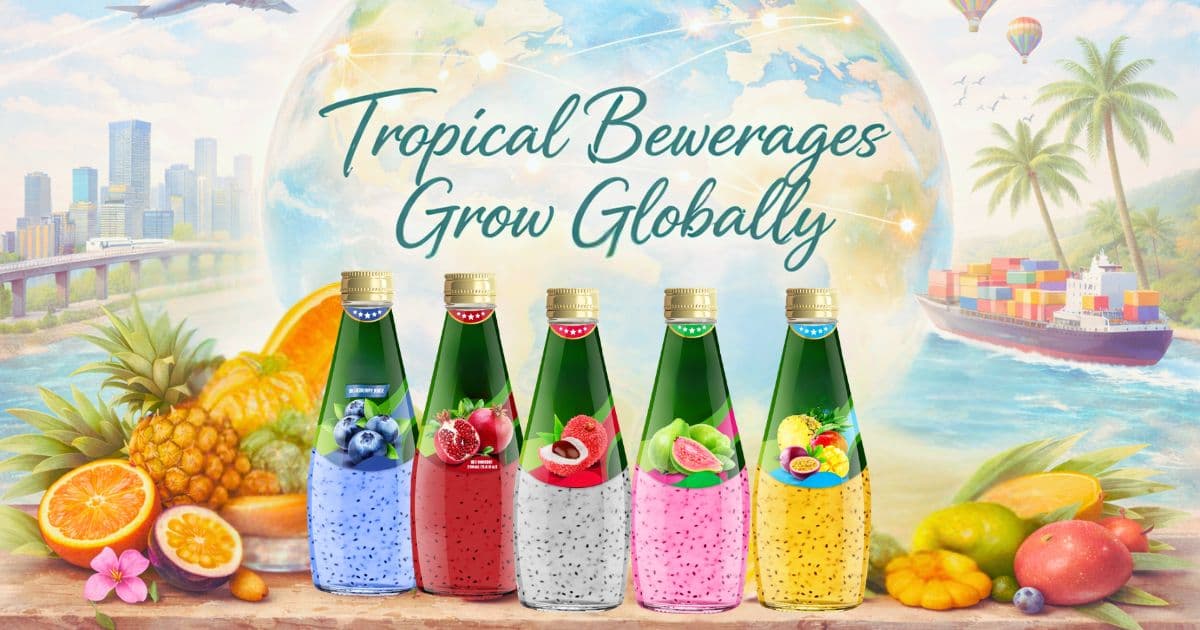
The global beverage industry is steadily shifting toward refreshing, fruit-forward, and easy-to-understand drinking experiences. Consumers across regions are moving away from overly complex or heavily processed drinks and are embracing beverages that feel natural, light, and enjoyable in everyday life. This shift is one of the key reasons the tropical beverages global market continues to expand across continents.
Tropical beverages are not just a product category; they represent a lifestyle and emotional experience tied to freshness, relaxation, and warm-weather enjoyment. For international buyers, distributors, and retailers, this category offers both strong consumer appeal and attractive commercial potential in the export beverage market.
Tropical beverages generally include fruit-based drinks and refreshment products made from tropical ingredients such as mango, guava, coconut, pineapple, aloe vera, passion fruit, and lychee. The category covers tropical juice drinks, coconut-based beverages, aloe vera drinks, fruit refreshment beverages, and blended tropical formulations designed for modern consumers.
The goal of this article is to provide a practical commercial overview of why the tropical beverages global market continues to grow. Instead of focusing on promotion, this article explores consumer behavior, climate relevance, packaging flexibility, channel performance, and international trade dynamics that drive global beverage trends and increase tropical juice demand.
1. Tropical flavors match global demand for refreshing everyday beverages
One of the most important drivers of the tropical beverages global market is the growing global preference for refreshing, everyday beverages. Consumers increasingly want drinks that feel light, hydrating, and pleasant across multiple consumption occasions such as work breaks, travel, social gatherings, and daily meals.
Tropical flavors naturally fit this expectation. Mango, guava, coconut, lychee, and aloe vera are widely associated with freshness and relaxation. These flavors create a sensory experience that feels simple, enjoyable, and emotionally positive, which aligns well with current tropical drinks trends. Additionally, tropical beverages often carry a perception of natural origin and fruit authenticity, making them easier for consumers to understand compared to complex functional beverages. This simplicity reduces purchasing hesitation and supports repeat consumption.
2. The category works across multiple product formats
Another key advantage of tropical beverages is their flexibility across different product formats. Growth in the tropical beverages global market is not limited to a single SKU or packaging type.
The category includes:
- Coconut water and coconut-based beverages
- Tropical juice drinks
- Aloe vera drinks
- Sparkling tropical beverages
- Blended fruit beverages
This diversity allows importers and distributors to design tailored product portfolios based on local demand and retail positioning. For example, coconut and aloe vera drinks may perform strongly in health-focused markets, while sparkling tropical beverages may attract younger consumers in urban areas. Such flexibility strengthens the category’s presence in the export beverage market and supports long-term growth.
3. Tropical beverages fit hot climates and year-round consumption
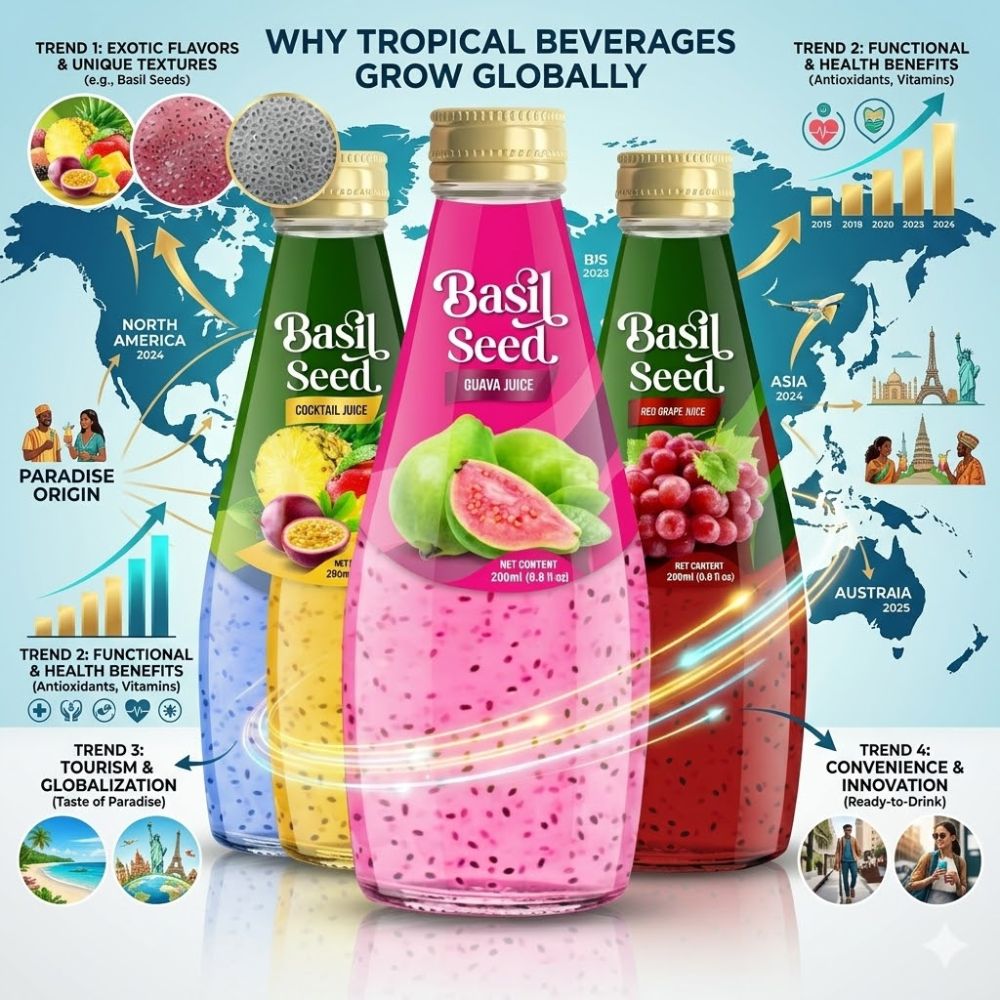
Climate suitability plays a major role in the expansion of the tropical beverages global market. In regions with hot or warm climates, refreshing beverages are not seasonal products but daily necessities. Markets such as Southeast Asia, the Middle East, Africa, and parts of Latin America naturally favor tropical beverages due to temperature and hydration needs. Meanwhile, Europe and North America see strong seasonal demand during spring and summer, further supporting global beverage trends. Because tropical beverages provide hydration and refreshment, they encourage repeat purchase behavior and stable demand throughout the year.
4. The category performs well in both modern retail and distribution channels
Tropical beverages show strong performance across multiple distribution channels. This versatility supports the expansion of the tropical beverages global market.
Key channels include:
- Supermarkets and hypermarkets
- Convenience stores
- Wholesalers and distributors
- Ethnic retail stores
- Foodservice and restaurants
- Online retail platforms
Because tropical beverages can adapt to different price points and packaging formats, they fit both premium and mass-market strategies. This wide channel compatibility strengthens the export beverage market and improves accessibility for global buyers.
5. Packaging innovation helps the category scale internationally
Packaging plays a crucial role in international beverage trade. The growth of the tropical beverages global market is closely linked to packaging innovation.
Common formats include:
- Aluminum cans for convenience and portability
- PET bottles for affordability and volume sales
- Carton packaging for long shelf life
- Glass bottles for premium positioning
Packaging affects logistics, shelf life, retail visibility, and consumer convenience. Export-ready packaging ensures that tropical beverages can travel long distances while maintaining product quality.
This packaging flexibility supports global beverage trends and strengthens international distribution networks.
6. Buyers value categories that combine familiarity and discovery
International buyers prefer products that are easy to introduce to consumers. Tropical beverages offer a balance between familiarity and novelty. Fruits like mango, coconut, and pineapple are globally recognized, while aloe vera and exotic blends create a sense of discovery. This combination reduces marketing risk and allows retailers to introduce new products without heavy consumer education. This is one reason why tropical juice demand continues to increase across global markets.
7. Global buyers are looking for breadth, not just one hero product
Today’s buyers are not looking for a single best-selling item. Instead, they prefer suppliers who can offer a broad tropical beverage portfolio. This includes multiple flavors, packaging types, and product categories. A wider portfolio allows buyers to test different SKUs, optimize shelf space, and create cross-selling opportunities. This approach strengthens long-term partnerships and supports sustainable growth in the export beverage market.
8. What this means for importers and distributors in 2026
The ongoing expansion of the tropical beverage market creates several strategic implications. Importers should tailor their product selection to suit the climate, consumer behavior, and retail structure. Balancing SKUs and packaging strategies is crucial for success. Partnering with experienced export partners can provide deeper market insights and supply stability. Companies like VINUT are often positioned as knowledge-based partners rather than simply product suppliers, focusing on industry understanding and supporting global distribution.
Frequently Asked Questions
Quick answers about this topic
Related Topics
VINUT Team
Beverage Industry Analyst
The VINUT editorial team brings 15+ years of expertise in Vietnamese beverage manufacturing, global export markets, and B2B industry trends across APAC, EU, and Middle East regions.